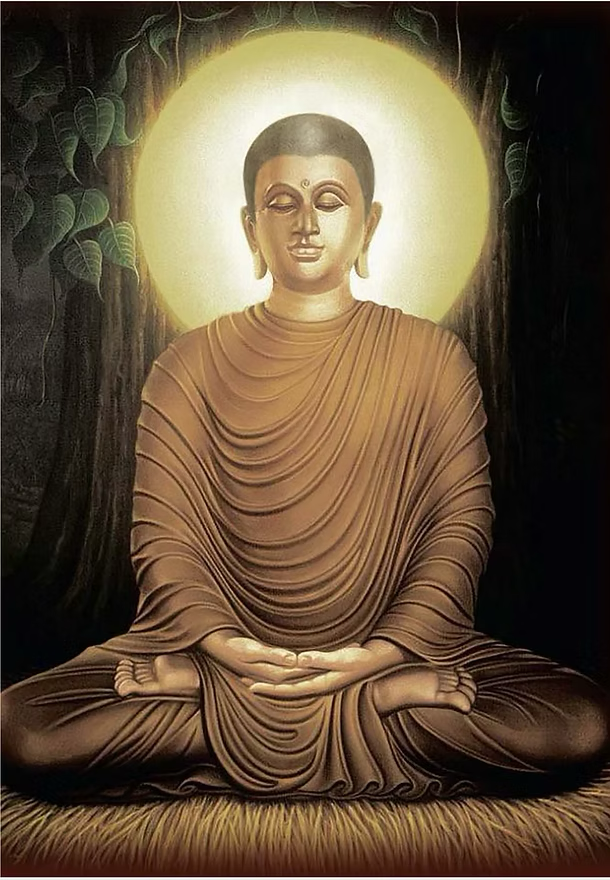
Chapter 3
Enlightenment: What is Enlightenment?
There is quite the hesitation in some people to discuss "Enlightenment", “Nibbāna", “nirvana”, "nippon", a “spiritual awakening”, a “Higher Mind”, a “Higher Consciousness”, etc. A person who has attained Enlightenment would never tell you they are experiencing Enlightenment, and if they do, would you believe them?
Enlightenment is a peaceful, calm, serene, and content mind with joy that is permanent. Enlightenment is the elimination of craving, anger, and ignorance, dissolving of the ego and realization of non-self. An Enlightened mind has eliminated 100% of all discontent feelings such as sadness, anger, frustration, irritation, annoyance, guilt, shame, fears, boredom, loneliness, shyness, jealousy, resentment, stress, anxiety, etc. You do not need to live with the constant struggles and burden of these unwelcome and discontent feelings. You can eliminate them through The Path to Enlightenment.
The mind needs to be gradually trained to eliminate craving, anger, and ignorance (unknowing of true reality) and it is these Teachings on The Path to Enlightenment that will help you to learn exactly how to accomplish this goal.
The Path to Enlightenment is a journey of growing, learning, and evolving through the gaining of wisdom or knowledge that develops a pure mind through training the mind in a “life practice”. There is gradual training and gradual practice that results in gradual progress.
Only you can do this important work to learn, reflect, and practice The Teachings to improve the condition of the mind and your life. Everything is experienced through the mind, so through training the mind in this way, one is then able to make wiser decisions through your own free will to improve your life. Accomplishing this goal, a Practitioner’s mind will then permanently reside peaceful, calm, serene, and content with joy.
Through The Path to Enlightenment, you will attain a stable, peaceful, and steady mind. You will develop lasting inner fulfillment and a content mind.
Enlightenment is attained gradually over time through learning and practicing Gotama Buddha’s Teachings so that you can observe truth that will allow you to acquire wisdom. The mind is gradually liberated to attain
48
Enlightenment through acquiring wisdom to know the true reality of existence by learning and practicing Gotama Buddha’s Teachings - The Natural Laws of Existence.
The unEnlightened mind does not understand “true reality” and through its misperceptions of how things function in the world, one makes unwise decisions leading to unwholesome results which includes discontent feelings.The Natural Laws of Existence are those aspects of the world that explain the way things happen in the world and are independently verifiable. They are not clearly seen by the untrained and unwise mind.
For example, The Natural Law of Kamma is a Natural Law of Existence.
The Buddha’s Teachings explain these natural laws so that through gaining this intellectual learning you can apply effort reflecting and practicing to observe the truth for yourself acquiring wisdom of The Natural Laws of Existence. Everything that we experience is based on these natural laws. Because these natural laws exist throughout the world and the world functions through these natural laws, once you learn them and reflect on them, you can see the truth of what The Buddha is explaining through the practice of his Teachings.
The Buddha explains in his Teachings such as The Three Universal Truths, The Four Noble Truths, The Eight Fold Path, The Five Precepts, The Natural Law of Kamma, etc., how the world functions through these natural laws and with that wisdom, a Practitioner can then make wiser decisions, no longer struggling with difficulties through the unknowing of these natural laws. And, this is why it is important to not believe The Teachings but instead, to learn, reflect, and practice so that you can see the truth for yourself of what these natural laws are and how they function so that you can acquire deep and profound wisdom to better operate through these natural laws making wiser decisions leading to wholesome outcomes.
The Buddha’s Teachings in this book series will explain these natural laws in a way that you can learn, reflect, and practice to acquire the wisdom of these natural laws leading to wiser decision making resulting in wholesome outcomes for your life.
It is a real struggle to exist in a world that the mind does not understand. It is “The Words of The Buddha” that explain The Natural Laws of Existence guiding the mind to acquire deep wisdom to make better free will decisions through a purified mind.
49
“The mind” is not the brain. The brain is not “the mind”. The brain is the organ that controls the functions of “the body”. The mind is not physical in nature, it is not tangible and cannot be touched. But the mind can be trained.
The mind is our consciousness where our intentions for speech and actions originate along with our thoughts, ideas, emotions, feelings, decisions, and perceptions, arise, are experienced, and then cease to exist. They are impermanent or temporary.
Enlightenment is attainable. It’s not something to be shy about or only talked about with a close group of friends who won't embarrass you.
Enlightenment is thought, by some, to be unachievable or something that only Ordained Practitioners or highly religious people can attain. I am here to tell you this is not true.
Buddhists, Christians, Muslims, Jews, Hindus, non-faith Practitioners, and all forms and labels of humans that are assignable can earn Enlightenment and experience a life without suffering or discontentedness. Let’s just think of everyone as a human without labels. That is best. We are all humans and a way to a better life is for everyone to attain Enlightenment. It’s like "heaven on earth".
Enlightenment is attainable during your current lifetime or at death. If you have not attained Enlightenment during this lifetime or at death, you will be reborn back into another existence. “The Cycle of Rebirth” will continue with a significantly rare opportunity to ever be reborn into the human realm again. Beings in the human and heavenly realms can attain Enlightenment.
Buddhism is a religion that people invented. Gotama Buddha offered Teachings as a Teacher, others made them into a religion. The Path he described to Enlightenment does not need to include religion.
If you find yourself not as engaged with the “rites, rituals, ceremonies, and worship” of an organized faith practice, this could be an indication that you are well on your way towards Enlightenment. Someone that is pursuing a path towards Enlightenment will typically step away from organized religion realizing that rites, rituals, ceremonies, and worship of organized religion are not required for one to achieve a better life.
You can practice a good moral life where you do no harm to others sharing universal love and compassion because you “know” it’s the “right” thing for life, not because a specific religion has told you what is right or wrong.
50
You can attain Enlightenment as a regular person living in your home. Enlightenment has no judgment or discrimination. Enlightenment is not held or reserved for a special class of people. Enlightenment is for all people.
Earning Enlightenment is challenging and takes a lot of work, but it is attainable. There are people that have experienced Enlightenment while living a normal and productive life in modern times.
Let’s open up the stigma of talking about Enlightenment and accept that it should be the goal of every human to attain this state of mind. Once you are experiencing Enlightenment and know the path, you can share it and help others on the path. Should you choose, you can learn the path now.
Enlightenment is nothing to prop up an ego against or state that someone is higher than anyone else. Someone with Enlightenment is not a special person or a special class of person. In fact, if someone expresses these thoughts or thinks this way, you can be sure they have not experienced Enlightenment.
Now, let’s discuss: What is Enlightenment?
Enlightenment is a mind free of craving/desire/attachment, anger/ hatred/ill will, and ignorance/delusion/unknowing of true reality with the realization of non-self and dissolving of the ego. (More on all these topics later in this book and book series.)
Enlightenment is a peaceful, calm, serene, and content mind with joy that is permanent. Enlightenment is the elimination of craving, anger, and ignorance (unknowing of true reality), dissolving of the ego and realization of non-self.
An Enlightened being is experiencing these mental qualities for the rest of their life.Peaceful: free from disturbance; tranquil
Calm: the absence of nervousness, agitation, or excitement in the mind
Serene: calm, peaceful, and untroubled; tranquil
Content: a state of satisfaction
Joy: pleased and delighted not associated with any specific object; unconditioned gladness; the Practitioner is not attaining it by craving/desire/ attachment.
51
These definitions explain what one is experiencing at “all times” once the mind is Enlightened. These mental qualities are permanent for the Enlightened mind as they are not based on any impermanent condition.
These mental qualities do not arise, do not change, and do not fade away. They are unconditioned.
An Enlightened mind has eliminated 100% of all discontent feelings such as sadness, anger, frustration, irritation, annoyance, guilt, shame, fears, boredom, loneliness, shyness, jealousy, resentment, stress, anxiety, etc. The mind will have a high degree of focus, concentration, memory, and clarity of mind. You do not need to live with the constant struggles and burden of these unwelcome and discontent feelings. You can eliminate them through The Path to Enlightenment.
The Path to Enlightenment is a purification of the mind. Having attained Enlightenment, the mind will be purified and be peaceful, calm, serene, and content with joy having eliminated 100% of all discontentedness - permanently.
A person who has attained Enlightenment will have eliminated The Ten Fetters. These are also referred to as “taints” or “pollution of the mind”. A simple way to think of the experience of Enlightenment, is that an Enlightened being, having eliminated 100% of all discontentedness, will always be in a good mood. There is never a time when an Enlightened being will experience a bad mood. The good mood is permanent because the mind has been trained through the elimination of all pollution of mind and conditions that cause a bad mood.
You will have an interest in giving and sharing known as generosity. The mind will have a genuine interest in seeing all beings be well or loving-kindness. The mind will have concern for the misfortune of others or compassion. There will be joy in others’ success even though you did not contribute to their success or sympathetic joy. The mind will have evenness of temper, especially in difficult situations, or equanimity. You will be able to treat all beings equally. The mind will have acquired deep wisdom in how to practice these qualities of mind and others through the attainment of Enlightenment.
You no longer pursue cravings or desires but seek only what you “need” in life, not what you “want”.
You will have trust in all beings. You will not blame others for the problems you face.
52
A mind experiencing Enlightenment will have an unshakable calmness, steadiness, and be “content” or “satisfied with what is” experiencing no discontentedness.
When you attain Enlightenment, you will clear out unwholesome thoughts, not cling to the past or future. The mind will be able to live clearly in the present moment where it can be peaceful. You will have a pure mind to conduct your daily life and make free will life decisions through wisdom that result in wholesome outcomes.
Enlightenment is achievable by all humans. Children were known to attain Enlightenment as young as age 7 during the lifetime of Gotama Buddha.
The more one understands and knows what Enlightenment is and is not, the more likely they will be to attain this mental state. This chapter is to help you understand the goal so that you will be able to progress towards the objective and know when the mind has arrived.
As you pursue Enlightenment, you will be able to eliminate your cravings and addictions. You will be open and trusting of all beings and not see another as an enemy. You will not discriminate or judge others. You will not have a desire to always be “right” and argue. If these exist now, you need more growth and more inner development to fully awaken to the Enlightened mind. The pursuit of Enlightenment is a gradual pursuit, a path towards a better life. It is also a life without suffering or discontentedness of mind. It’s a higher state of consciousness that allows you to function in life with ease and smoothness. You clear the clouds of darkness that form discrimination, judgment, and arrogance, among other unwholesome qualities of mind.
Gotama Buddha described that when one has attained Enlightenment they “lay down the burden” or “lay down the stress”. This refers to the burden or stress of life and the carrying of unwelcome emotions and feelings caused by the mind’s mental longing with a strong eagerness (craving/desire/ attachment) which produces discontentedness.
Because one aspect of attaining Enlightenment is to extinguish any and all craving (mental longing with a strong eagerness), you must not also have craving and desire to attain Enlightenment. When there is craving, there can be no Enlightenment. Therefore, we pursue Enlightenment as an interest, goal, or objective without craving nor desire. Craving, desire, and attachment are defined as “a mental longing for something with a strong eagerness”.
Enlightenment is not happiness as happiness is an impermanent feeling that you cannot maintain permanently. Gotama Buddha’s Teachings provide the
53
mind with a path to Enlightenment, a permanent mental state that is peaceful, calm, serene, and content with joy.
Many feel the goal of life is to be happy but this is not possible. Permanent happiness is an unrealistic goal and will only lead to further discontentedness when the mind cannot maintain the feeling of happiness long term. If the mind is not happy, it will move to sadness, anger, or worse. Happiness is a pleasant feeling and is considered discontent because it is impermanent. Since the mind cannot reside in happiness permanently, it is unsatisfying. The mind is shaken up when experiencing conditioned pleasant feelings and once the pleasant feelings are gone, one is left with painful feelings of sadness, anger, frustration, irritation, etc.
Happiness is a feeling that is part of the three aspects of a discontent mind. A discontent mind will experience pleasant feelings, painful feelings, and feelings that are neither painful-nor-pleasant based on an impermanent condition, rather than be inwardly peaceful, calm, serene, and content with joy not based on a condition. The Enlightened mind is experiencing unconditioned peacefulness, calmness, serenity, and contentedness with joy and, therefore, it is permanent since these mental qualities are not based on an impermanent condition.
Conditioned happiness is temporary and will not last forever. When the mind is not happy, it will move to another feeling and, thus, the unEnlightened mind cycles through all these impermanent feelings continuing to be discontent because it is basing its internal feelings on impermanent conditions.
Happiness is based on certain conditions that cause the mind to be happy. When those conditions are removed, the happiness will be temporary and the mind will move to another feeling. The feeling of happiness is impermanent because it is based on certain conditions that need to exist to create the feeling of happiness in the mind.
One who has attained Enlightenment will have a permanent mental state of joy. Having attained Enlightenment, the joy experienced is without conditions and not based on an impermanent situation, object, or experience and, therefore, is permanent.
One can be happy without having the mental state of joy. To be joyful is a mental state, not a temporary feeling like happiness. Happiness can exist with ill will or hatred while the joyful mental state of Enlightenment would not include ill will or hatred. A person who has attained Enlightenment will not have ill will or hatred.
54
Having attained Enlightenment, the mind will be peaceful, calm, serene, and content with joy. This is a permanent mental state where the mind can reside. As you attain Enlightenment, the mind will be peaceful, calm, serene, and content with joy.
You will laugh, joke, and have fun but you will not allow the mind to dwell in conditioned happiness because the mind will know it is impermanent. Instead, the mind will be trained to acquire unconditioned joy which is permanent because the mind is not latching onto impermanent conditions to create the inner joy.
You will laugh, joke and have fun but then be able to easily bring the mind back to the middle where the mind is peaceful, calm, serene, and content with joy.
If the mind is unwilling to let go of impermanent conditioned happiness, it will never experience permanent unconditioned joy of the Enlightened mind.
With your current state of mind, you might think that a steady, calm, and stable mind is impossible or unattainable. However, if you accept that these things are attainable, it is just a matter of learning, implementing, and experiencing this important change in your life. You can pursue Enlightenment in this lifetime and the first step is making the decision that it is attainable and that you WILL pursue it.
As you start to learn and implement The Teachings, found throughout this book series, you will notice positive results. Slowly over time, the mind and your life will improve as you understand and implement The Teachings. You do not need to have belief, you will see the results when you implement The Teachings to observe the truth acquiring wisdom.
Believing in God is not required and it will not hinder you in the process of pursuing Enlightenment. Just learn and implement these Teachings because you know that they are helping you to create a better life for yourself and those around you.
Enlightenment is not a mystical and mysterious existence or a status of one being higher than another. In fact, it’s just the opposite. It’s learning that a polluted mind leads to a life of suffering and discontentedness.
Each person should make Enlightenment their number one goal in life.
By attaining Enlightenment, all things are possible. Whether you would like to be a good partner, parent, friend, Student, employee, boss, sibling, etc., the
55
process of earning your own Enlightenment will enable you to fulfill all those roles, and any others you wish with a high degree of clarity of mind.
Enlightenment is attainable. You can do it. You will enjoy much more from life in the process of pursuing Enlightenment.
What are the advantages of attaining Enlightenment?
There are significant benefits that one will experience through the pursuit and attainment of Enlightenment such as:
- Increased and high degree of focus
- Increased and high degree of concentration
- Improved and high degree of memory
- Clarity of thought and mind
An Enlightened being will have deep wisdom in which to conduct daily life. They do not argue, fight, or have any hostility.
They are polite, kind, friendly, respectful, calm, caring, etc. They deeply understand what causes harm in the world and, thus, do not cause any harm through their intentions, speech, actions, or livelihood so no harm comes to them.
An Enlightened being can create healthy personal and professional relationships with ease.
Because of these benefits and others, their mind and their life are peaceful, calm, serene, and content with joy for the remaining time of their life, their last life.
Enlightenment is a permanent mental state.
Why pursue Enlightenment?
1.) To attain complete and ever lasting peace of mind and a peaceful life where the mind resides permanently peaceful, calm, serene, and content with joy eliminating 100% of all discontent feelings. To acquire a high degree of focus, concentration, an improved memory, and clarity of mind.
56
2.) To share with others how to attain ever lasting peace of mind and how to obtain a peaceful life where their mind resides permanently peaceful, calm, serene, and content with joy. To help others acquire a high degree of focus, concentration, an improved memory, and clarity of mind.
3.) To benefit all of humanity through the elimination of your own pollution of mind. You will eliminate all unwholesome results from your decisions through wise decision making, thus, create a more peaceful humanity through cleaning up your own unwholesome conduct to attain a peaceful mind.
4.) To respect Gotama Buddha for his Teachings. The best way to show respect to a Teacher is to learn and practice their Teachings.
5.) To share these Teachings with your family, friends, those close to you, and your homeland to assist in creating a more peaceful life for all those closest to you and all of humanity.
6.) If you are an Ordained Practitioner, to respect Household Practitioners for their support of your journey to Enlightenment. The Household Practitioners support you and you should support them through a dedicated practice of these Teachings where you return The Teachings to them to benefit their life. It is Kamma!
Do you need any other reasons?
How do you attain Enlightenment?
To pursue Enlightenment, you must learn and implement The Teachings of:
A.) The Three Universal Truths
B.) The Four Noble Truths
C.) The Eight Fold Path
D.) The Five Precepts
E.) The Brahmā-vihāras
F.) The Ten Fetters
G.) The Seven Factors of Enlightenment
H.) Extensive Meditation Training
There are plenty of other Teachings and you can explore them all. However, these are some of the core Teachings to create a solid foundation for you to work towards Enlightenment in your life practice. A wise Practitioner might choose to focus on developing an understanding and practice of only The Three Universal Truths, The Four Noble Truths, The Eight Fold Path, The Five Precepts, and developing a meditation practice to get started. Then, as results are being experienced, expand into deepening your practice through
57
all the other Teachings. You will need to seek support and guidance to accomplish the goal of developing your life practice.
Having Teachers or guides to assist you on the path to Enlightenment is very important and beneficial. You will not be able to pursue this path alone. As you seek Teachers, be sure that you find Teachers free of craving, anger, and ignorance (unknowing of true reality) with no ego. Enlightenment is the opposite of these things. If you need help on this path, it’s important to find someone that does not embody these aspects of mind. You should be interested to have Teachers and guides who have loving-kindness and compassion towards all beings and are open to helping all people without expectation of payment for their support.
You can pursue Enlightenment no matter what has transpired in the past. No matter what your previous intentions, speech, actions or anything that has transpired in the past, Enlightenment can still be pursued and attained. What really matters on your path to Enlightenment is that you learn, reflect, practice, and observe the results in the present moment. Dedication and commitment to learning and growing will ensure you are moving the mind towards Enlightenment.
This path requires inner growth and development as there is nothing external that is needed in pursuit of this path.
Gotama Buddha’s Teachings are not to control an individual nor dictate what they should or should not do. But instead, they provide guidance that when practiced will lead to Enlightenment, the liberation of the mind, a peaceful and content mind and, thus, a peaceful and content life. Everything in this practice is obtained through your personal choices.
It is important to pursue Enlightenment without craving or desire to attain it but use it as a goal, an interest, or an objective.
If there is craving, even craving for Enlightenment, you will not be able to attain full Enlightenment as an Arahant. And if there is craving at the time of death, there will be rebirth.
There is no finish line to the attainment of Enlightenment. Once a mind reaches the fourth Stage of Enlightenment, the mind can continue to ascend to higher degrees of the Enlightened mind. A Practitioner needs to focus on the one (1) step in front of them that leads to further progress on The Path to Enlightenment. If the mind is focusing on the imaginary non-existent finish line, the craving for Enlightenment will inhibit and hinder the mind from experiencing Enlightenment.
58
Instead, a Practitioner may be interested to consider themselves already Enlightened and they are just working to remove all the pollution of the mind that is inhibiting them from experiencing Enlightenment. In this way, the mind is not attempting to attain anything at all but instead, the mind is already Enlightened and a Practitioner’s life practice is to purify the mind removing the pollution that is hindering one from experiencing the radiance and brightness of Enlightenment.
How can you know if you are walking towards Enlightenment?
You will notice, as you learn and implement these Teachings, that the mind will continually clear out more and more. It takes time, lots of time, however the results of learning and implementing these Teachings are more and more profound as you learn and progress. Enlightenment does not require belief because you will see the results for yourself. You will experience increased levels of concentration and clarity of mind. You will find that it’s easier to communicate, accomplish tasks, and conduct daily life. There will be a gradual decreasing of strong feelings and emotions that cause struggles and difficulties in life and within your relationships.
Situations in the past that caused anger or frustration will no longer result in you reacting with the same feelings but rather, you will experience evenness of temper or equanimity. You will be able to respond in difficult situations rather than react.
What are The Seven Factors of Enlightenment?
The Seven Factors of Enlightenment are not to determine if someone is or is not Enlightened but instead, they are used to fine tune the mind bringing it to a balanced state - “in the middle”. If a Practitioner is noticing that the mind is not “in the middle”, as described in the Chapter titled “The Middle Way: Walking The Middle Way” (Chapter 6), use the associated factors of Enlightenment to move the mind to practicing the middle way.
When the mind becomes complacent, sluggish, lethargic, dull, or lazy, this is the time to practice the Enlightenment factors of Investigation, Energy, and Joy.
When the mind is excited, elated, ecstatic, euphoric, or over stimulated, this is the time to practice the Enlightenment factors of Tranquility, Concentration, and Equanimity.
59
The Enlightenment factor of Mindfulness is always useful and should be practiced in each and every moment. Mindfulness will need to be developed as part of training the mind through The Eight Fold Path (Chapter 5) using Breathing Mindfulness Meditation (Chapter 11) on a consistent and ongoing basis.
1.) Mindfulness: (Awareness of mind as described in The Eight Fold Path as “Right
Mindfulness”.)
2.) Investigation: (Dedicated examination, exploration, research, study, and questioning to learn The Teachings.)
3.) Energy: (Effort, determination, ambition, initiative, motivation, vigor, and enthusiasm; willingness to do something.)
4.) Joy: (Pleased and delighted not associated with any specific object; unconditioned gladness; the Practitioner is not attaining it by craving/desire/attachment.)
5.) Tranquility: (Relaxed, steadiness, stability, peacefulness, and stillness of mind.)
6.) Concentration: (Mental alertness, attentiveness, the ability to give your attention or thought to a single object or activity. “Singleness of mind” as described in The Eight Fold Path as “Right Concentration”.)
7.) Equanimity: (Mental calmness, composure, and evenness of temper, especially in a difficult situation; treating everyone impartially.)
| It is, Monks, when The Seven Factors of Enlightenment are developed and cultivated in this way that they fulfill true wisdom and liberation. (Gotama Buddha) (Reference: SN 46.6) |
60
What are The Four Stages of Enlightenment?
There are four (4) stages in the attainment of Enlightenment, however, these are for personal development purposes only. You should not compare or profess to another person which Stage of Enlightenment you think you have attained. Self declared attainment has no beneficial purpose and oftentimes comes from arrogance and pride, the ego, while being fraught and filled with errors.
One goal of these Teachings is to eliminate arrogance and pride, the ego, therefore, if a Practitioner is declaring their self determined Stage of Enlightenment, there is still arrogance and pride. A Practitioner sharing with others what they think they have attained is an indication that, the mind is not yet Enlightened.
An Enlightened being would have no need or desire to profess what they think the mind has attained. An Enlightened mind is so peaceful, calm, serene, and content with joy that an Enlightened being will just be enjoying life rather than attempting to convince others or boasting about what they think they have attained.
Self determination of attainment of any Stage of Enlightenment is fraught and filled with errors.
While one should consistently apply effort towards learning, reflecting, and practicing The Teachings to include understanding The Four Stages of Enlightenment, these are used for personal development to guide a Practitioner’s journey assisting you on the path to higher and higher degrees of attainment not as a way to brag, show off or profess to others what you think you have attained. Convincing the mind that it has attained any of these Stages of Enlightenment or that the mind is actually Enlightened is dangerous for the mind.
The ego is constantly going to be interested to convince the mind it is more Enlightened than it really is. The ego is equivalent to a “bad tenant” who never pays rent and doesn’t want to leave the residence. The bad tenant, the ego, needs to be evicted but every time things move in that direction it tries to convince the mind it is more Enlightened than it really is because the ego does not want to leave. The bad tenant keeps wanting to stay but yet provides no benefit whatsoever and continually attempts to convince the mind it is Enlightened so that the bad tenant, the ego, can stick around.
You need to evict the ego and as long as the mind is convinced that it is experiencing higher and higher degrees of attainment, then there is the risk or danger that arrogance and pride will arise, thus, halting any forward
61
progress. With arrogance and pride (i.e. the ego), the mind will want to measure and compare what it thinks it has attained to others creating unwholesome decisions that produce separation rather than harmony amongst friendly Practitioners and “all beings”. The mind could become judgmental looking down on others rather than practicing loving-kindness and compassion with an interest in seeing all beings attain Enlightenment.
You should never believe you have attained Enlightenment and continuously pursue this path your entire life. Should you ever think you have attained Enlightenment and are “done”, the mind can become “sluggish or complacent” and halt your progress on this path.
Arrogance and pride can arise in the mind if one becomes absorbed, engrossed or fascinated with progressing through The Four Stages of Enlightenment. As soon as any arrogance, pride, or ego arises, the mind is not experiencing Enlightenment.
If any of this is occurring in the mind, the mind is not Enlightened and is essentially sabotaging a Practitioner’s ability to experience more progress. Through never convincing the mind that it is truly Enlightened, even when all discontentedness has been eliminated, then, the mind can continue to reside protected from any potential arising of arrogance and pride (i.e. the ego), and continue to experience increased benefits as the mind becomes more and more Enlightened.
While we use the term Enlightenment, this mental state is not a destination that once one arrives, everything is complete. Instead, as the mind arrives to Enlightenment having eliminated all discontentedness, a Practitioner can experience increased benefits of the Enlightened mind as the brilliance and brightness of the Enlightened mind shine through more and more. If one convinces themselves they are Enlightened and are actually “done”, then they would not experience the continued and increasing benefits of the mind entering into an even higher degree of Enlightenment.
There will be glimpses of Enlightenment as you develop your practice. Whether it be in meditation, during the daily activities, or for multiple minutes, hours, weeks, months, etc. as one progresses. These glimpses are similar to a flickering lightbulb that is struggling to shine bright on a consistent and ongoing basis. These glimpses of Enlightenment help a Practitioner to observe the possibilities of what one is headed towards and that they are headed in the right direction. But the mind needs to remain unaffected by these momentary or elongated and impermanent experiences. The mind needs to remain unaffected by the improved condition of the mind to be able to experience more and more awakening of the mind.
62
The mind could experience multiple minutes, hours, weeks, months, etc. with the returning of discontentedness at any moment. A wise Practitioner needs to remain determined, dedicated, and diligent to apply effort watching over the mind with mindfulness or awareness of mind. If one proceeds without guarding the mind with mindfulness, then cravings/desires/ attachments can emerge from the corners of the mind producing discontentedness.
Just like the mind will experience flickering and glimpses of Enlightenment as the mind is developed, the mind will also experience a flickering diminishing of cravings/desires/attachments and discontentedness.
As discontentedness is gradually being extinguished, the qualities of the Enlightened mind are continuing to increase. All the while, the Practitioner is having experiences in the mind they never knew existed and the mind can become quite blissful and elated. It is important to reside unaffected by these experiences continuing to bring the mind back to the middle. If the mind takes great pleasure in what it is experiencing, this is dangerous and risky as the mind then continues to crave these pleasant feelings stalling progress.
This is yet another reason guidance with a Teacher is so important. As the mind moves and shifts through the preliminary phases of the Jhānas and into The Four Stages of Enlightenment, a Practitioner is going to need support from someone who has experienced what they are experiencing. This will allow a Practitioner to gain the insight and Teachings needed to continue forward development through seeking guidance of how to continue the mind’s cultivation.The Ten Fetters are the ten (10) individual aspects of the mind that need to be eliminated to attain Enlightenment. The word “fetter” is defined as: “a chain or shackle used to restrain a prisoner, typically placed around the ankles”. The Ten Fetters are essentially keeping a being trapped in The Cycle of Rebirth bound to the endless cycle of continuous rebirth experiencing discontentedness over countless lives.
It is not until one eliminates The Ten Fetters that a being’s mind is liberated from discontentedness and The Cycle of Rebirth. A fetter can also be referred to as a taint or pollution of the mind. A taint is an impure quality of the mind and is why these need to be eliminated to attain Enlightenment. The Ten Fetters pollute the mind not allowing us to experience the brightness and radiance of the Enlightened mind.
63
These are “The Ten Fetters”. These are the chains that bind us into The Cycle of Rebirth and to multiple lifetimes of experiencing continuous discontentedness. You must eliminate these and practice The Seven Factors of Enlightenment to attain Enlightenment - along with many other Teachings as part of The Eight Fold Path.
The Ten Fetters
Lower Fetters
1.) Personal existence view (Eliminating the concept of a permanent self from the mind. Realization of The Universal Truth of Non-self.)
2.) Doubt (Elimination of doubts about The Teachings and the ability of them to attain Enlightenment. Confidence in The Buddha, The Teachings, The Community, your Teacher, and your own ability to attain Enlightenment.)
3.) Wrong behavior and observances (Elimination of the mind’s belief that rites, rituals, ceremonies, and worship will help a Practitioner to attain Enlightenment. Well developed practice of The Eight Fold Path.)
4.) Sensual desire (Elimination of the desire for pleasures from The Six Sense Bases: eyes, ears, nose, tongue, body, and the mind.)
5.) Ill will (Elimination of hostility, hatred, anger, aggression, resentment, frustration, irritation, annoyance, etc.)
Higher Fetters
6.) Desire for form (Elimination of desire for existence in the form realms; Animal or Human. Elimination of the fear of death.)
7.) Desire for the formless (Elimination of desire for existence in the formless realms; Hell, Afflicted Spirits, or Heaven.)
8.) Conceit (Elimination of arrogance, pride, judging, measuring or comparing as superior or inferior to others. Ego is completely dissolved.)
9.) Restlessness (Elimination of confused, distracted, worried, anxious, restless state of mind; the opposite of “singleness of mind”.)
10.) Ignorance (Elimination of delusion or unknowing of true reality through acquiring wisdom. Learn, reflect, and practice of The Teachings of The Buddha, such as, The Three Universal Truths, The Four Noble Truths, The Eight Fold Path, The Five Precepts, The Three Wholesome/Unwholesome Roots, The Natural Law of Kamma, The Cycle of Rebirth, etc. all detailed later in this book and book series.)
64
A Stream-Enterer (returning to human realm no more than 7 times) is:
Free From:
1. Personal existence view
2. Doubt
3. Wrong behavior and observances
A Once-Returner (returns to human realm only one time) is:
Free From:
1. Personal existence view
2. Doubt
3. Wrong behavior and observances
Greatly Thinned:
4. Sensual desire
5. Ill will
A Non-Returner (does not return to human realm) is:
Free From:
1. Personal existence view
2. Doubt
3. Wrong behavior and observances
4. Sensual desire
5. Ill will
An Arahant is free from all of the five lower fetters and the five higher fetters, which are:
1. Personal existence view
2. Doubt
3. Wrong behavior and observances
4. Sensual desire
5. Ill will
6. Desire for form
7. Desire for the formless
8. Conceit
9. Restlessness
10. Ignorance
A Practitioner attaining the results and Stage of Enlightenment as an Arahant is Enlightened. In the first three (3) Stages of Enlightenment, the mind is not yet Enlightened and is still experiencing discontentedness. There will be a gradual diminishing of discontentedness as the mind ascends through each Stage of Enlightenment but it is not until the mind reaches the Stage of Enlightenment as an Arahant, where the mind is actually Enlightened, that all discontentedness is eliminated and there is no more rebirth in The Cycle of Rebirth.
65
What is a Buddha?
A “Buddha” is not a Stage of Enlightenment but instead, is a unique type of Enlightened being. A Buddha is an Arahant who has attained Enlightenment without any assistance of Teachers but only through their own efforts of using the world as their Teacher and perhaps Teachings of a previously awakened Buddha.
There are three primary criteria of what makes a Buddha a Buddha.
1.) A Buddha awakens to Enlightenment through their own independent journey without the assistance of any Teachers, independently discovering The Teachings that lead to Enlightenment.
A Buddha has fully eliminated The Ten Fetters to attain Enlightenment as an Arahant but they have done so through their own independent journey without the assistance of any Teachers, developing deep wisdom of what is needed to attain Enlightenment.
2.) A Buddha guides countless others to Enlightenment during their lifetime through sharing their independently discovered Teachings that led to their own Enlightenment during their independent journey.
A Buddha has the ability to guide countless beings to the attainment of Enlightenment during their lifetime and after their death. A Buddha will dedicate the remaining time of their life towards sharing their Teachings and guiding countless beings to Enlightenment.
3.) Upon a Buddha’s death, they will leave their Teachings in a condition that can be continually shared assisting countless more beings to Enlightenment after their death.
A Buddha’s Teachings and Students will continue to guide countless people to Enlightenment after a Buddha’s death. A Buddha has already done the hard work of figuring out how to attain Enlightenment. You just need to learn and practice his Teachings to improve the condition of the mind and your life.
A Buddha is referred to as a Fully Perfectly Enlightened Buddha, a Perfectly Enlightened One, or a Tathāgata. They are a human being, a Teacher, one with deep compassion for all beings and the world. A Buddha has deep wisdom to help the world and can accomplish that goal through individuals choosing to learn and practice their Teachings to attain Enlightenment.
66
They are considered Perfectly Enlightened because there are no outside influences that have led to their awakening, so they have “Perfect Enlightenment” where their mind is unaffected by any teachings outside of their own independently discovered Teachings that led to their awakening.
A Buddha will have an excellent memory being able to recall countless past events and situations with stunning accuracy. Unlike other humans, their memory does not fade and is not overwritten.
A Buddha will need to weave their way through a previous Buddha’s Teachings as all things are affected by impermanence, thus, a previous Buddha’s Teachings will not be in a pure condition.
A Buddha will be able to easily determine the condition of the mind of another person, then be able to help them with Teachings to eliminate the unwholesome qualities of the mind and cultivate wholesome qualities of the mind. A Buddha will be able to observe the condition of another being’s mind but only does so with an interest to help the other being eliminate the unwholesome qualities from the mind and cultivate wholesome qualities in the mind to guide one towards Enlightenment.
A Buddha will have a deep practice of their own Teachings, leading by example as a living, breathing, walking example of their Teachings.
A Buddha will be able to make predictions of the future and understand the future progress of the world as a whole while explaining past events and the current condition of the world through their Teachings.
A Buddha will know this is their last life without being reborn into any realm of existence. They will have insight into their previous lives and knowledge of their existence in those previous lives. Their only goal will be to lead as many people to Enlightenment as possible and to create a strong Community of humans with Enlightenment who will assist others to attain Enlightenment and leave strong Teachings that will assist unEnlightened beings to become Enlightened after a Buddha’s death.
When a Buddha arises in the world, this is your best opportunity to attain Enlightenment. A Buddha will have independently realized their Enlightenment and will be experiencing “Perfect Enlightenment”. A Buddha will have deep knowledge, deep understanding, and deep wisdom of how to attain Enlightenment through their independent realization of Enlightenment.
A Buddha will be able to teach and guide all humans, who are interested to learn, towards Enlightenment.
67
A Buddha arising in the world is extremely rare. The last Buddha currently known to the world was Gotama Buddha who died over 2,500 years ago.
Why Does a Buddha Appear in the World?
A Buddha appears in the world when a Buddha is needed.
When humanity has reached a point of major confusion, conflict, and there is grave suffering throughout the world, a Buddha will appear.
A Buddha has the ability to help all of humanity to realize a better existence through their independently realized Teachings.
A Buddha will have struggled for countless lives to reach Enlightenment. Their journey on The Path would have been long and difficult over untold numbers of countless rebirths but they would never give up in their pursuit to Full and Perfect Enlightenment. They also would never give up on sharing their Teachings with all of humanity teaching until death.
A Buddha would have deep compassion for every single being in existence - past, present, and future.
A Buddha would know that they have attained Full and Perfect Enlightenment and are able to help all of humanity now and well into the future. But, all of humanity is never ready and willing to learn, grow, and progress on The Path during a Buddha’s existence. All unEnlightened beings are already experiencing significant internal struggles so they will also struggle to closely understand and practice The Teachings that will lead to their full liberation. Most will not even know there is a solution to their struggles of the mind because they do not necessarily realize there is a problem.
Complacency is the norm and is the most detrimental quality of the mind.
Humanity may or may not even see the struggles and issues that are apparent and so clear to a Buddha. The vast majority of humanity will not even know that a Buddha has appeared because they are unable to determine who is or is not Enlightened and, thus, would not be able to determine who is or is not a Buddha. Humanity is mostly “unknowing” of true reality and “unknowing” of the countless problems faced by all beings. The large masses do not understand the challenges they are facing with the unEnlightened mind, so they are unfamiliar with the solutions to the unEnlightened mind.
68
A Buddha sees all the problems and has all the solutions of how to guide a being on The Path to Enlightenment so that a more Enlightened humanity can work together to solve its challenges.
A Buddha’s responsibility is not to himself as they have transcended any selfish pursuit or interest in fame or fortune. A Buddha chooses to spread the word of their appearance and Teachings through guiding people to attain Enlightenment without the need for others to know they are a Buddha. A Buddha can be more productive through others not knowing he is a Buddha because he can more accurately assess a Practitioner’s mind. If there is a worldwide announcement of the arrival of a Buddha, there would be those who agree and come to that Buddha for guidance and others who would reject the idea of a Buddha being in existence.
Those who reject the idea of a Buddha’s existence would not seek guidance on The Path to Enlightenment, and those who do seek guidance might try to be on their “best behavior” masking the mind’s true nature. This would hinder a Buddha’s ability to observe the condition of a Student’s mind and, thus, be more limiting to how a Buddha could assist their Students in the progress of Enlightenment.
A Buddha would not be interested in a worldwide announcement of their awakening as it would be counterproductive and would instead, choose to humbly and peacefully share their Teachings with those who choose to be taught. A Buddha will encourage people to learn and progress on The Path guiding anyone who is interested to attain Enlightenment.
A Buddha’s goal is to help eliminate the massive amount of suffering that is pervasive and the original cause for the Buddha’s appearance in the world.
A Buddha appearing in today’s society would need to be creative in understanding exactly how to present The Teachings to an “unaware” and otherwise absorbed audience. An audience that is complacent either unknowingly unaware or purposefully ignoring their own suffering.
Either way, upon a Buddha’s appearance, the Buddha will have to put much more thought and effort into helping people understand that there is a problem rather than the thought and effort that they would put into the actual sharing of The Teachings themselves.
Complacency is not easily eradicated, and the vast majority of the world is complacent unknowing of the true struggles faced and the solutions to these struggles.
69
Once a person decides they need guidance and accepts responsibility to learn and practice, the Buddha is well prepared to deliver every Teaching that permeates their entire mind.
There is no one or nothing that could eliminate the wisdom acquired by a Buddha through their independently realized Enlightenment.
There are no specific physical features that would identify a Buddha as being a Buddha. You will know who is a Buddha through observing their work to develop a dedicated Community of Practitioners and Teachers while assisting countless Practitioners to attain Enlightenment. You will be able to observe through a Buddha’s work towards sharing The Teachings into the world in such a way that helps countless beings attain Enlightenment during his lifetime and after his death leaving The Teachings and a Community to share those Teachings. And, if you know that individual does not have any Teachers but was able to benefit countless beings to attain Enlightenment during their lifetime and after their death, with their Teachings continuing to help countless beings attain Enlightenment, then this person could be considered a Buddha.
Are there any physical or emotional symptoms that we are currently experiencing that may not be medically related that could be attributed to awakening of the mind to Enlightenment?
As you pursue Enlightenment, you may notice various physical and emotional symptoms associated with your ascent to Enlightenment. This is a short list. Do not get attached to these symptoms or think Enlightenment is imminent. Just know that these symptoms are normal and keep learning, growing, and practicing these Teachings so that you can continue to pursue Enlightenment.
It is not that pursuit of Enlightenment has caused these symptoms necessarily, but instead, that as the mind awakens the body will oftentimes experience various sensations or experiences as the mind moves towards performing more optimally. These symptoms are not permanent and may or may not be noticed or even happen at all.This list is shared so that if you are or have experienced any of these symptoms, that you will understand it is normal.
It is important for Practitioners to understand, if they are experiencing these symptoms that it does not mean that something is “wrong” with the physical body or mind but instead, these are just normal symptoms that may or may not be experienced along The Path to Enlightenment. If there are concerns,70
seek medical advice to determine if there are any underlying health issues but do not be surprised if there is nothing found.
In fact, some of these are indications that the condition of the mind is improving and as these symptoms subside, the body and the mind will function more optimally.
Physical:
1.) Pressure or ringing in the ears.
2.) Weight fluctuations.
3.) Faster hair and nail growth.
4.) Heart palpitations.
5.) Looking and feeling younger.
6.) Power surges and hot flashes.
7.) Periods of lethargy and fatigue or excitement and elation.
8.) Skin eruptions: rashes, bumps, acne, hives, and shingles.
9.) Headaches or pain in the head.
10.) Backaches, neck pains, flu-like symptoms (this is called vibrational flu), digestive problems, muscular spasms or cramps, racing heartbeat, or chest pains.
11.) Numbness, tingling, or itching sensations all over the body.
12.) The 5 physical senses (Sight, Hearing, Smell, Taste, and Touch) all become heightened and lessened multiple times as you pursue Enlightenment. Temporary blurry vision is common.
13.) You may experience dizziness, light headedness, nausea, confusion, lack of immediate or short-term memory.
14.) Events that alter your life: death, divorce, change in job status, loss of home, illness, and/or other catastrophes - sometimes several at once.
15.) The pupils of your eyes may become enlarged and will not contract even in lighted conditions. This is a condition called “wisdom eyes” or slang “egg yolk”. It signifies being able to see more of the world and walking from the darkness into the light. Your eyes are now, “wide open” to the world. This usually occurs as you are successfully implementing most of The Eight Fold Path and moving into the Jhānas.
Emotional
1.) No longer have any fears including the fear of failure or fear of death.
2.) Being alone feels comfortable.
3.) Changes in sexual drive.
4.) Insomnia or irregular sleeping schedule.
5.) You may experience anxiety, depression, difficulty falling asleep, waking up early, or any disruption to your sleeping schedule as you are letting go of past trauma, experiences, suffering and expectation of the future.
6.) Losing track of time or feeling as though you are in a time warp.
71
7.) You may notice that you no longer have dreams or cannot remember your dreams. This is noticeable as you stop clinging to past thoughts or being worried about the future. At this point, you are living more in the moment.
A Practitioner may or may not experience any of these or may have already been experiencing these symptoms prior to embarking on their journey on The Path to Enlightenment.
This list is provided to put the mind at ease that if you are currently experiencing any of these, they are temporary and have answers that are not based in permanent medical conditions. The journey to Enlightenment is highly beneficial and does not cause any adverse symptoms or complications in one’s life. There are only beneficial results as part of learning and progressing on The Path to Enlightenment that creates more peacefulness and harmony within all your relationships.
Guidance on The Path
Attempting to experience Enlightenment without proper guidance or people who understand it, can be scary and would be impossible to actually attain - other than for a true Buddha. Since you are not a Buddha, you will need guidance. Unfortunately, most of the people around you may be unfamiliar with the process of pursuing Enlightenment and will potentially encourage you to seek mental healthcare. This will inevitably lead you to being labeled with a mental condition and to prescription medications which could suppress the progression of Enlightenment.
Enlightenment is an enjoyable pursuit but can be very challenging at times. You should surround yourself with people that understand the progression of Enlightenment as sometimes, it can get uncomfortable when you are letting go of your deepest held emotions and past traumas. Without this support, you will not be able to fully break through to achieve your final goal of a liberated mind. You can be left with countless physical and emotional symptoms that appear on the surface to those inexperienced in its symptoms, to be a collection of other physical/emotional disorders or conditions.
At certain times as you are pursuing Enlightenment, you might feel the most uncomfortable that you have ever felt in your entire life both physically and emotionally. When the mind is struggling on The Path to Enlightenment, that is when it’s doing the most work, with the best opportunity for progress when one seeks guidance and support from a Teacher. You need support from caring and understanding people that will help you progress to a Higher Consciousness.
72
You are welcome to seek guidance with the author of this book through the methods previously mentioned. If you choose to seek guidance with someone else, the below can be helpful to find a Teacher that would have the needed life practice well established to support your learning and growth.
How to Determine If A Potential Teacher Has Attained Enlightenment
To attain Enlightenment, you will need to have the help of Teachers and Guides.
The written Teachings offered from Gotama Buddha’s lifetime do not contain everything you need to know to attain Enlightenment. Studying only the written text without the assistance of Teachers and Guides who understand The Path to Enlightenment will not produce Enlightenment for you.
You will need guidance from Teachers who have attained Enlightenment to assist you along The Path to attain Enlightenment.
If you are going to learn Gotama Buddha’s Teachings that lead to Enlightenment, it is important to find a Teacher who has already attained Enlightenment. How can one lead another person to attain Enlightenment if they themselves have not yet attained Enlightenment? This would be like attempting to learn how to drive a car from someone who has never driven a car. This would most likely not be the wisest decision.
A Teacher of this Path should not force others to understand and practice Gotama Buddha’s Teachings. Attaining Enlightenment does not work that way and will not work that way.
A Teacher of this Path should politely, kindly, and respectfully share The Teachings with others, as they ask or request guidance, which illuminates The Path so that by the Practitioner’s own personal choices, they can learn and practice The Teachings to attain Enlightenment.
Through learning and practicing The Teachings with guidance from a Teacher, a Practitioner can independently observe the truth for themselves to acquire wisdom. The wisdom one acquires will liberate the mind to attain Enlightenment.
It is through a Practitioner’s own personal choices that they will learn and practice The Teachings to gradually attain the results of an Enlightened mind.
Enlightenment requires dedication, commitment, and real work to learn and understand the truths that Gotama Buddha taught, so that you know on your
73
own that The Teachings are 100% truth. A Practitioner can only accomplish this if they take the time to put aside what they currently understand about the world that is keeping the mind in the unEnlightened state. Through these Teachings, a Practitioner needs to expand their wisdom beyond what they currently know.
Through applying The Teachings in “real life” a dedicated Practitioner can see the truth for themselves to gradually attain Enlightenment.
In effect, seeking out and acknowledging a Teacher is confirmation that one’s mind is open to receiving guidance which will ultimately lead to their progress on The Path to Enlightenment. Seeking the guidance of a Teacher is also very helpful to reduce and eliminate arrogance (i.e. the ego). Admitting to one’s self that they do not know it all, is helpful to reduce the ego.
Whether it was learning the ABC’s, 123’s, reading, writing, or any other long term learning goal you have pursued has always involved seeking guidance with a Teacher. The Path to Enlightenment is exactly the same. You are going to need Teachers.
To learn and attain Enlightenment will take a significant amount of time, effort, dedication, and commitment. So, if you are going to invest the time, effort, dedication, and commitment to attain Enlightenment, it is important that you find someone who has already attained the mental state of Enlightenment.
In the unEnlightened state, you are in darkness. A Teacher with Enlightenment will be carrying the light to guide you away from the darkness and towards the light through sharing Teachings. Without a Teacher who has attained Enlightenment, you walk The Path alone without any light. You will find that it is impossible to complete the journey walking alone in the darkness without a light.
If you ask someone if they have attained Enlightenment, a person who has attained this state of mind will not admit “Yes, I have attained Enlightenment”.
It is considered by most that if you say that you have attained Enlightenment then you do so with arrogance and pride (i.e. ego), placing yourself above another person. One aspect of attaining Enlightenment is that you dissolve the ego and judgment of others. If someone professes they have attained Enlightenment, then it is considered they have done so out of ego and thus, have not attained Enlightenment at all.
74
A person who has attained Enlightenment will be more interested in helping you attain Enlightenment than in discussing their own attainment of Enlightenment. If you are seeking guidance on The Path to attain Enlightenment, they will most likely focus the discussion primarily on “What is Enlightenment and how you can attain it”, rather than on, their own attainment of Enlightenment.
You can consider asking a potential Teacher the following questions to help you determine if you would like to learn with them.
1.) Ask a potential Teacher “Have you attained Enlightenment?”.
If they are eager to answer “Yes” and are eager to discuss their current stage of attainment of Enlightenment focusing the discussion on themselves, you should take this into consideration. You may conclude that perhaps their arrogance and pride (i.e. ego) will inhibit your learning on the path to Enlightenment. A person who has truly attained Enlightenment will not have arrogance or pride because the ego has been eliminated.
2.) Ask a potential Teacher “What is Enlightenment?”.
A person who has attained Enlightenment will have extensive knowledge of what Enlightenment is and what it is not. In this book, there are details of what Enlightenment is and what it is not. This will help you better reflect on the answer provided by the potential Teacher.
3.) Ask a potential Teacher “How to attain Enlightenment?”.
A person who has attained Enlightenment will have extensive wisdom of how to attain Enlightenment. Their answer of how to attain Enlightenment with Gotama Buddha’s Teachings may include the following:
- Learn, Reflect, Practice, and Observe the results of a well developed practice of The Teachings shared by Gotama Buddha. The pursuit to Enlightenment is an independent journey with Teachers and Guides to assist you. However, you will need to do all the work yourself, as your potential Teacher, can only guide you.
75
- A small sample of The Teachings that are needed to attain Enlightenment include:
A.) The Three Universal Truths
B.) The Four Noble Truths
C.) The Eight Fold Path
D.) The Five Precepts
E.) The Brahmā-vihāras
F.) The Ten Fetters
G.) The Seven Factors of Enlightenment
H.) Extensive Meditation Training
4.) Ask a potential Teacher “What rites, rituals, ceremonies, and worship are required to attain Enlightenment?”.
There are no rites, rituals, ceremonies, and worship required to attain Enlightenment.
If someone explains certain chants that need to be repeated, certain postures the body needs to be trained to acquire, or sells/provides you any external devices that includes bells, strings, clothing, beads, music, statues, special drinks or food, etc. then this person has not attained Enlightenment.
Enlightenment does not require any special chanting or external devices to attain this mental state. If someone claims they have special chants or external devices to attain Enlightenment and it is only them who possess these secrets, they have not attained Enlightenment. There is nothing external required to attain Enlightenment and if they claim special status with pride, you can be sure this person has not attained Enlightenment.
Enlightenment is not about training the body to acquire a specific body position. Enlightenment is about training the mind. If someone focuses their Teachings on training the body, then they have not attained Enlightenment.
The Teachings of Gotama Buddha are known to many people and there is not just one (1) special person who knows all the secrets to attaining Enlightenment and there are no special external devices required to attain Enlightenment.
All the work and ability to attain Enlightenment is already inside of you.
You need a well developed Teacher to help guide you to attaining Enlightenment who focuses on purification of the mind. You will need The Teachings, Teachers, dedication, and commitment to attain Enlightenment.
76
The Teacher will provide The Teachings to teach you. You will need to provide the dedication and commitment to learn and practice The Teachings.
5.) Ask a potential Teacher “What is the price or cost for me to receive training with you?”.
A person who has attained Enlightenment will have deep loving-kindness and compassion for all beings with an interest to help “all beings”.
Therefore, the potential Teacher will not be interested in money or acquiring wealth. They will potentially need money to support their life but they will not be interested in teaching you to attain Enlightenment for a price or specific cost. They will not have a set price or menu of options for attaining Enlightenment. However, they will accept donations to support them in their life and in teaching other Students.
It is common for Students to offer their Teachers financial support or gifts as appreciation for The Teachings and guidance but for someone with Enlightenment, there will be no expectation of acquiring money or gifts in return for teaching you. A potential Teacher with Enlightenment will not “ask” you for money or gifts.
The Teachings they offer should be unattached to the accumulation of wealth, possessions, or fame. The only interest a potential Teacher should possess is to help and benefit “all beings” without an interest in personal gain.
6.) Ask a potential Teacher “What type of Students do you accept and what type of Students do you turn away?”.
A person who has attained Enlightenment will have openness, friendliness, and be accepting of all people who are interested to learn and grow in The Teachings of Gotama Buddha as long as the Student has respect for The Teachings and the Teacher.
Observing a potential Teacher’s speech and actions and ensuring that they are practicing “Right Speech” and “Right Action” is crucial. Spending time to know the potential Teacher through building a relationship prior to learning with them can be helpful. Anyone who has attained Enlightenment will be a perfect example of these Teachings in practice.
Answering the questions provided here is helpful, but observing a potential Teacher’s practice of The Teachings without judgment can provide you the most insight. It will help you to ascertain whether they are a good role model of these Teachings and if they would benefit your learning and growth or not.
77
A potential Teacher should be polite, kind, friendly, and respectful at all times. You should observe that they are never angry, frustrated, irritated, or annoyed for any reason. They should be patient to assist any and all Students who choose to seek guidance.
If the Student shows repeated disrespect towards the Teacher in their effort to openly and freely offer Teachings to a Student, it would not be uncommon for the Teacher to no longer offer Teachings to that Student.
If you are repeatedly disrespectful to a Teacher or fail to study diligently, it is the results of your decisions (i.e. your Kamma) to be turned away or potentially be asked to not come back.
There needs to be gratitude, respect, and politeness from the Student to the Teacher to establish a proper Student-to-Teacher relationship. The respect and politeness should be in both directions. From the Student to the Teacher and from the Teacher to the Student.
You should observe that the potential Teacher is modeling The Teachings by example. That includes being polite, kind, friendly, respectful, and patient through their speech and actions staying open to “all beings”.
7.) Ask a potential Teacher “Who can attain Enlightenment?”.
All humans who have dedication and commitment to learning and growing can attain Enlightenment. To attain Enlightenment, does not require you to ordain or otherwise abandon your household life although, that is an option some choose to take through becoming an Ordained Practitioner.
You can have life partners, children, an occupation, and possessions while living a household life and still on the path to attaining Enlightenment as an Arahant, the highest stage of Enlightenment.
All humans can attain Enlightenment, no matter your race, gender, sexual orientation, current faith practice, or any other labels people assign to a human being.
The only limitation to attain Enlightenment is yourself. You need to get the “self” out of the way and focus on the growth and development of the mind while eliminating all complacency. Determination, dedication, and diligence to learning and growth is required.
All humans can pursue Enlightenment if they have the proper Teachings, Teachers with Enlightenment, dedication, and commitment.
78
8.) Ask a potential Teacher “Is it possible to eliminate sadness, anger, frustration, irritation, annoyance, guilt, shame, fears, boredom, loneliness, shyness, jealousy, resentment, stress, anxiety, and ego?”.
One primary aspect of attaining Enlightenment is to eliminate sadness, anger, frustration, irritation, annoyance, guilt, shame, fears, boredom, loneliness, shyness, jealousy, resentment, stress, anxiety, and the ego. If a potential Teacher has attained Enlightenment, they will not experience any of these feelings and know that the ego needs to be dissolved to attain Enlightenment.
Through discussion of these questions and others you may develop, you will need to decide if you feel that you can respect and learn with a potential Teacher.
You may need to experience multiple Teachers and Guides along The Path. Being attached to just one Teacher may not produce the best results.
However, your initial training should be with one Teacher to establish a solid foundation and practice of The Teachings. You should notice in a relatively short timeframe that The Teachings shared are clear, concise, and direct with you being able to independently confirm the truth in The Teachings resulting in gradual improvement to the condition of the mind.
Enjoy the journey of meeting and learning from countless people along The Path whose only goal should be to help you. Every experience you have in life, no matter how you perceive it, is an opportunity for learning and growth.
With The Teachings, Teachers, dedication and commitment you can pursue Enlightenment and experience a better quality of life through The Teachings of Gotama Buddha.
79
|
One Who Points Out Treasure Ānanda, I shall not treat you as the potter treats the raw damp clay. Repeatedly restraining you, I shall speak to you, Ānanda. Repeatedly guiding you of what to avoid, I shall speak to you, Ānanda. The truly dedicated will stand [the test]. Regard him as one who points out treasure, the wise one who seeing your faults guides you of what to avoid. Stay with this sort of Teacher. For the one who stays with a Teacher of this sort, things get better, not worse. (Gotama Buddha) (Reference: MN 122 & DHP 76-77) Author’s Thoughts: In order to share The Teachings that lead to Enlightenment, a Buddha or any Teacher, would need to help Students uncover unwholesome qualities in the mind and in their life practice while pointing out the cultivation of wholesome qualities. A Student will need to put their trust in the Teacher while investigating the areas of improvement the Teacher identifies and shares with the Student. A Student will need to be inviting and accepting of a Teacher’s guidance in order to identify areas of improvement and then learn, reflect, and practice Teachings to improve their life practice. If a Student allows the ego to block the guidance from the Teacher while feeling displeasure in the Teacher “pointing out treasure”, they will not “stand the test” of receiving guidance from the Teacher to progress towards Enlightenment. A Teacher would need to exert a significant amount of time, effort, energy, and resources to guide a Student to Enlightenment. A Teacher should not ask for any benefits from their Students, but instead, await what is given as offerings. A Teacher’s only goal should be to guide a Student to Enlightenment without any personal gain for themselves whatsoever. So, a Teacher who takes their time, effort, energy, and resources to “point out treasure” should be regarded as a “wise one who seeing your faults” will help you to learn, reflect, and practice The Teachings to attain Enlightenment. The Buddha’s advice is to “stay with this sort of Teacher” as things only “get better, not worse”. As the condition of the mind and one’s life, “only gets better, not worse” when a Student is open to understanding guidance from a wise Teacher who kindly and patiently shares areas for improvement while not seeking any benefit from you - their only goal is to help you. In this type of relationship with a wise Teacher pointing out areas of improvement as treasure to be appreciated based on the goal of helping you, you should “stay with this sort of Teacher” as things only “get better, not worse”. |
80
|
Learning Resources for Further Exploration Audiobook (Audiobook) - (Volume 1 - Chapter 3) - Enlightenment: What is Enlightenment (Read & Listen) Ep. 503 - (Audiobook) - (Volume 1 - Chapter 3) - Enlightenment: What is Enlightenment? Youtube Video(s) (Mini-Lesson #2) - What is Enlightenment? (Group Learning Program) - Chapter 3 - Enlightenment: What is Enlightenment? (Group Learning Program) - LEARN Loving-kindness Meditation (Part 4 of 4) Podcast(s) Ep. 429 - (Group Learning Program) - Chapter 3 - Enlightenment: What is Enlightenment? Ep. 430 - (Group Learning Program) - LEARN Loving-kindness Meditation (Part 4 of 4) Quiz Enlightenment: What is Enlightenment? (Confirm your understanding of this Chapter by completing this online quiz. You are the only person who will see the results of the quiz.) |
81