Chapter 23
Symbolism of Teachings:
Reminders Through Imagery
Our knowledge and ability to understand these Teachings has evolved over time. During Gotama Buddha’s lifetime, all his Teachings were shared orally. Later, human development evolved to include technology and the ability to capture these Teachings in written format.
Today, we have the ability to read, write, and understand The Teachings in written format, through oral instruction, and a full range of other options.
Prior to organized educational systems, the oral Teachings were captured into symbolism and imagery that could remind Practitioners of these important Teachings that guided their lives.
The symbolism was captured in the architecture of Temple construction projects, artwork, and in other locations where people could be reminded of The Teachings through viewing of imagery which would then strengthen their understanding and practice of The Teachings.
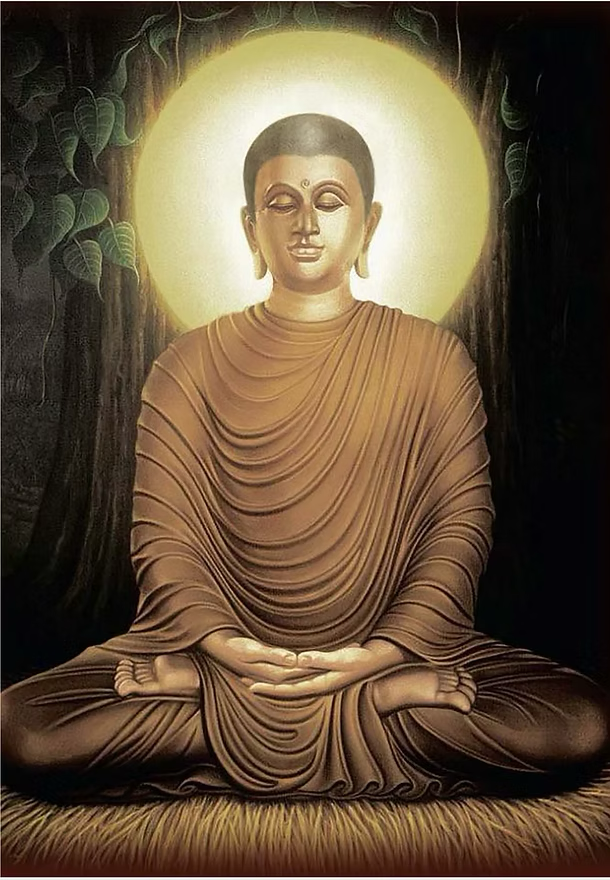
If an individual had learned The Teachings with Gotama Buddha in detail, then upon viewing certain images they could be instantly reminded of The Teachings helping to further soak The Teachings into the mind so that a Practitioner could practice them in daily life.
Today, if a Practitioner has deeply studied and learned The Teachings of Gotama Buddha, they can view symbolism and imagery in Temple construction projects, artwork, and in other locations to be reminded of The Teachings and help to further develop their life practice.
Having the understanding of Gotama Buddha’s Teachings and then visiting Temples or viewing artwork can be even more enjoyable and beneficial as a Practitioner can confirm their understanding of The Teachings. It is also interesting to “decode” the symbolism and imagery used in past generations through Temples built many centuries ago. These Temples and the artwork located in the Temples indicate what was on the mind of those who participated in the construction of the Temple.
Visiting Temples throughout the world can be an enjoyable family activity. Together with family and friends, you can uncover the secrets of the past
372
identifying connections to The Teachings in the symbolism and imagery used in Temple construction. But first, you will need to have an understanding of The Teachings themselves through developing your life practice.
This chapter will help you to develop an understanding and connections to The Teachings of some of the most common imagery used through Temple construction projects, artwork, and in other locations. This will help you remember The Teachings and help you to further develop your life practice when you are viewing Buddhist symbolism.
Now that you have had the opportunity to learn a significant portion of Gotama Buddha’s Teachings in this book and book series, learning the symbolism and imagery to remind you of The Teachings can be quite interesting and intriguing.
As you visit Temples and view Buddhist artwork, you can look for these images and others to “decode” what was on the mind of those involved in the Temple construction and the artists in developing the artwork.
You might also find images that are not shared in this chapter but based on your continued practice to deepen your understanding and wisdom of these Teachings, you might be able to “decode” other symbolism and imagery on your own.
As always, if you are unsure or you’d like to confirm your understanding, you can ask your Teacher or other Practitioners for assistance in understanding any imagery that you encounter in your journey within Buddhist Communities. But through a deep understanding of these Teachings, you may find that with your own investigation it is quite interesting, fun, and beneficial to reflect on the symbolism and imagery you discover in your journey to determine if you can “decode” the meaning on your own.
This will help to further confirm The Teachings of The Buddha within the mind providing you an opportunity for learning and growth.
373
| Symbol | Connection to Teachings |
|---|---|
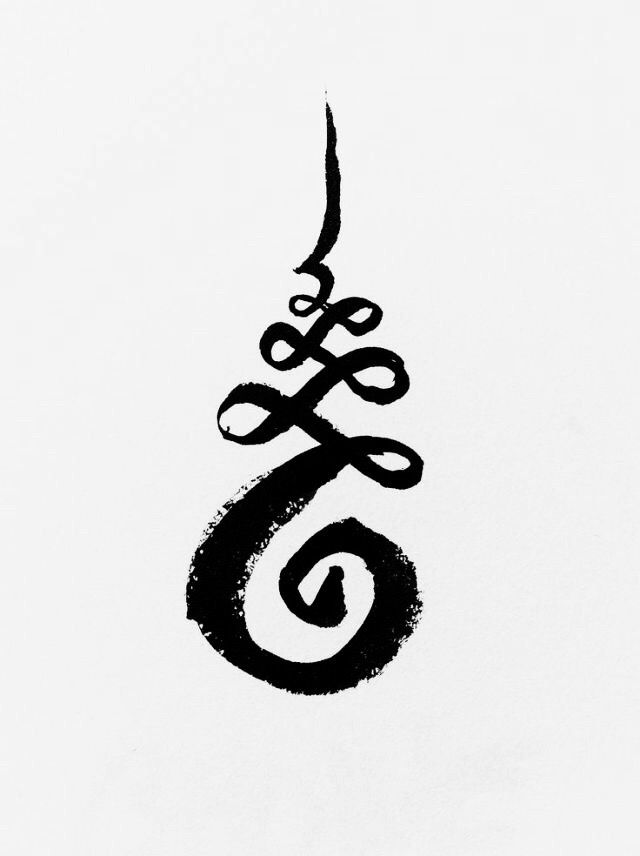 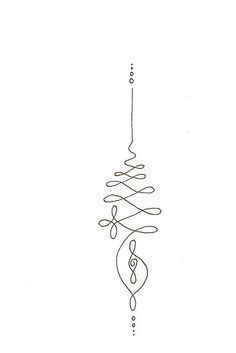 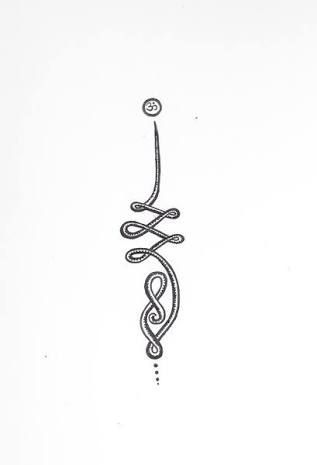 |
These symbols represent the attainment of Enlightenment. The image originates at the bottom, typically with a large circle, through a long winding path ending with a straight line pointing upwards. This symbolizes being bound to "The Cycle of Rebirth" represented in the circular part of the image. Then, once a human being gains access and understanding of Gotama Buddha's Teachings, there is a long winding path that starts broad and wide, narrowing towards the top until we have a straight and direct line to our Higher Consciousness, Nibbāna, and Enlightenment. Notice how the image loops and sometimes tracks slightly backwards in its progression from bottom to top but ultimately proceeds upwards to completion at the very top where the line then becomes extinct and nonexistent. This symbolizes The Path to Enlightenment as one will walk forward, sometimes with minor steps backwards but ultimately moves forward and upwards to completion attaining Enlightenment. This image can often be found on Buddha statues or artwork located between the two eyes, at the third eye. Opening of the third eye, or inner eye, is also a symbol of having attained Enlightenment. When you observe this imagery, it should remind you that Enlightenment is achievable by all human beings. And, that your path may be long, wide, twisting and turning until you finally narrow in on The Teachings and your practice, until the mind ascends to Enlightenment through dedicated learning and practice. |
374
| Symbol | Connection to Teachings |
|---|---|
|
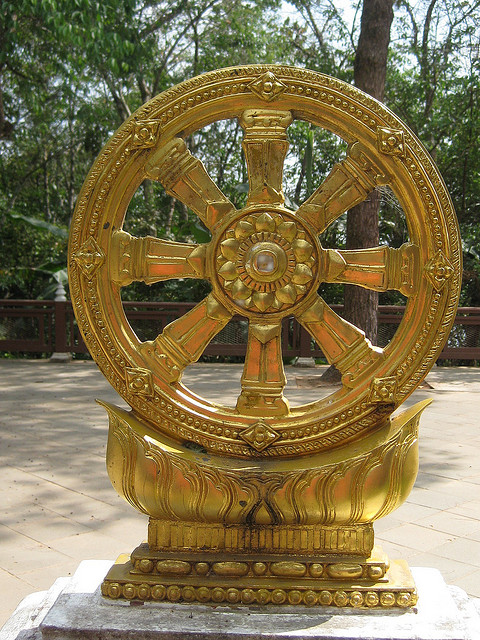
The “Dhamma Wheel” is most often depicted with eight spokes, this represents The Eight Fold Path. (Dhamma = The Teachings) The Eight Fold Path is the path that leads to the elimination of discontentedness and ultimately The Path to Enlightenment to escape from The Cycle of Rebirth. The Wheel itself can remind us that, in the unEnlightened mental state we are bound by “The Cycle of Rebirth” with The Eight Fold Path providing us The Path to escaping The Cycle of Rebirth. The circle of the wheel represents The Cycle of Rebirth while the individual spokes represent the individual steps of The Eight Fold Path, the escape from discontentedness and The Cycle of Rebirth. This imagery is usually placed on Temple markers, in artwork, and oftentimes behind the head of Gotama Buddha in paintings or near statues. The purpose for placing The Dhamma Wheel behind Gotama Buddha’s head is, a Dhamma Wheel is turned by a Buddha. It signifies a stepping forward of civilization into a new era. A Buddha awakening in the world is a major step forward for all of humanity. A Buddha turning a Dhamma Wheel signifies a stepping forward of civilization into a new era. With the awakening of a Buddha, The Teachings that lead to Enlightenment can shine in the world and be shared with all of humanity in a way that will guide countless beings to Enlightenment during their life and after their death. A Buddha will know the location of this dhamma wheel, when to turn it, and in what direction to turn it. The location of The Dhamma Wheel is on the head of a Buddha where the top of the skull and back of the skull comes together. A Buddha will turn this Dhamma Wheel counter clockwise upon their awakening. When you observe a Dhamma Wheel in artwork, it should remind you that you are bound in The Cycle of Rebirth, and The Eight Fold Path is the path to escaping The Cycle of Rebirth. |
375
| Symbol | Connection to Teachings |
|---|---|
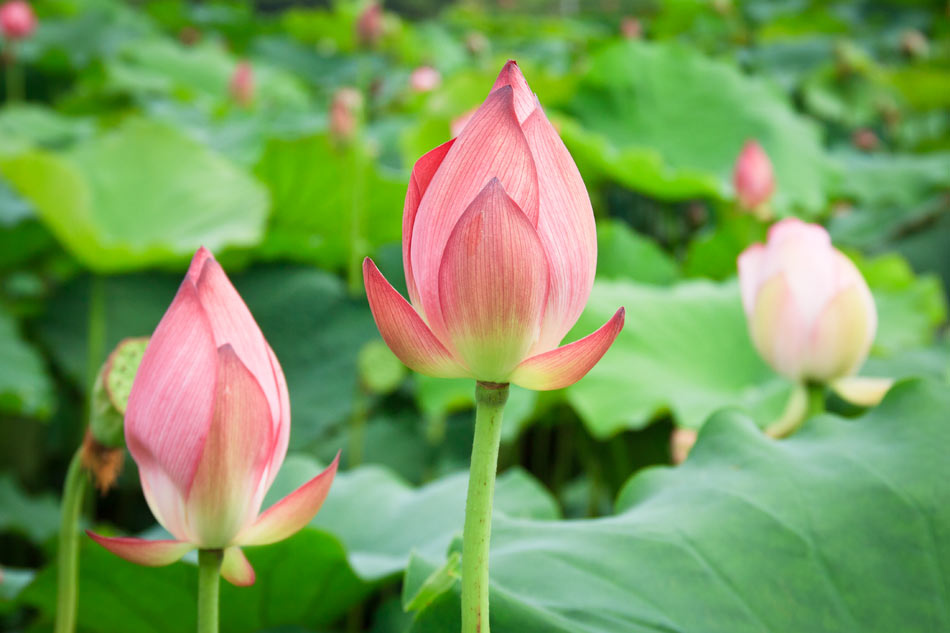  |
Lotus flowers are another form of imagery and symbolism that is used to remind us of The Teachings. A closed lotus reminds us of everyone’s potential to become Enlightened. We all have the potential to attain Enlightenment, just like every flower has the potential to bloom. A fully open lotus flower is another symbol of the attainment of Enlightenment. A lotus flower will oftentimes float above the water and even be suspended over the water by a strong stem while the roots of the plant are down into the dirty and murky earth under the water. The roots signify our attachments to this physical world while the attainment of Enlightenment, the fully bloomed lotus flower above the water, signifies the mind raising above craving/desire/attachment ascending to Enlightenment. The strong stem of the lotus flower signifies one’s solid dedication and stability of learning and practicing these Teachings from Gotama Buddha with a strong life practice to attain Enlightenment. Our life practice is the support and stability needed for the mind to progress to Enlightenment. |
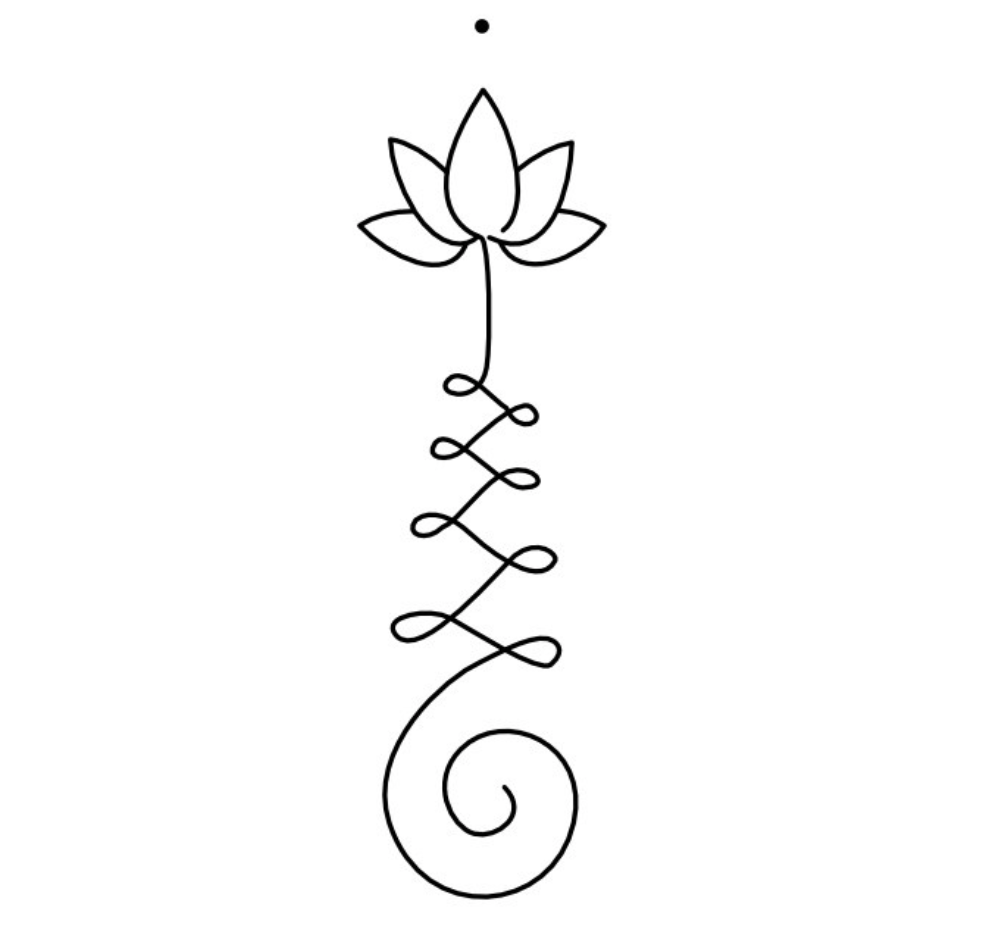 |
You will also see combinations of symbols like the one depicted here. You can see the symbol depicting Enlightenment with a lotus flower at the top. These are two symbols that are combined both representing the attainment of Enlightenment. |
376
| Symbol | Connection to Teachings |
|---|---|
 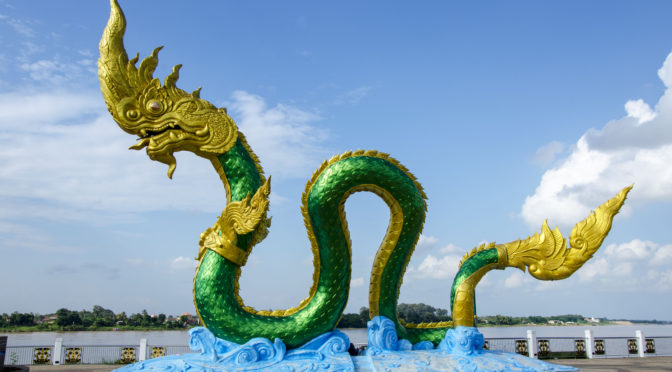 |
The King of the Serpents or Serpent King (Naga), reminds us of a story passed down from the time of Gotama Buddha that reminds us of The Teachings. It was shared that during Gotama Buddha’s lifetime, there was a Serpent King who, although reborn into the animal realm, was so close to human existence that with a more developed consciousness he could turn himself into the human form. He turned himself into a Monk, male Ordained Practitioner, so that he could be in the company of Gotama Buddha and learn The Teachings of Gotama Buddha. However, the Serpent King fell asleep along with the other Monks and lost the control of his consciousness turning back into a serpent. Upon observing this, the Monks were unsettled and fearful deciding to alert Gotama Buddha. One who has attained Enlightenment has eliminated all fear 100%. Gotama Buddha calmly walked to the area where the Monks were frightened and had a discussion with those present. Gotama Buddha explained to the Serpent King that it was impossible for him to attain Enlightenment in the form of an animal that he needed to live out his current existence facing his Kamma as a Serpent. And, if his Kamma led him to being reborn as a human in his next existence, he could then learn and practice The Teachings to attain Enlightenment in that new human existence. Upon Gotama Buddha explaining this to the Serpent King, he agreed to leave The Community of Monks to not cause any further disruption but decided to be a protector and guard of The Teachings from all evil doers who worked to degrade The Teachings of Gotama Buddha. Today, you can see this imagery at the front of many Temples and at the front of staircases leading into many Temples as The King of the Serpents is standing guard protecting The Teachings from all evil doers. Anyone entering should have wholesome intentions to learn and practice The Teachings not interested in causing any harm to The Teachings but instead, interested in seeing them shared. It should remind us of our past existences in the animal realm and that it is only in the human or heavenly realms that we can attain Enlightenment. All fear needs to be eliminated to attain Enlightenment. It should remind us not to be complacent or delay our learning and growth in The Teachings and practice. It can also remind us of our commitment to learning and practicing The Teachings as the Serpent King was highly dedicated, even in his animal existence, to learn and protect The Teachings. Additionally, it reminds us that we must experience all the unwholesome Kamma we create in this existence and from our past existences prior to attaining Enlightenment, thus, motivating us to create only wholesome Kamma. Whether this story is actually true is unknown, however, it is a wonderful story that can remind us about many of The Teachings through viewing this one artwork as we enter many Temples or viewing any artwork that contains the Serpent King. |
377
| Symbol | Connection to Teachings |
|---|---|
 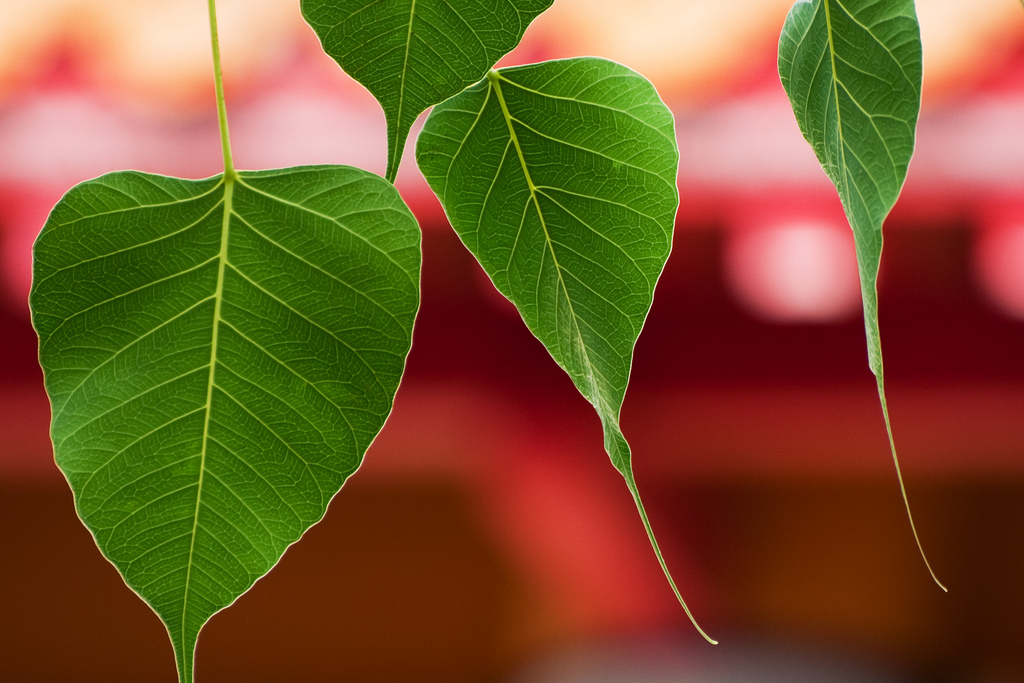 |
You will often see drawings or depictions of a leaf from a Bodhi Tree, Pippala Tree, Peepul Tree, Peepal Tree or Ashwattha tree (in India and Nepal), or the scientific name “Ficus Religiosa”. This is the tree that it is said that after six (6) long years of dedication to his practice, while meditating under this tree, Gotama Buddha made the final effort to attain Enlightenment. Gotama Buddha then contemplated under this tree for seven (7) weeks whether or not to share The Teachings he had discovered in his independent journey to Enlightenment. He was not sure that the world was ready to understand what he had to share. He eventually did share The Teachings going on to a long teaching career of 45-years of sharing The Teachings on The Path to Enlightenment. While Gotama Buddha shares in his Teachings that the journey to Enlightenment is through gradual training and gradual practice to experience gradual progress, it is this tree that is considered the location where Gotama Buddha attained Enlightenment. In reality, one would gradually attain Enlightenment over the course of a multi-year life practice and there is not just one point in time where a person might be considered Enlightened or not but instead, a gradual progression towards the goal with gradual training and gradual practice needed to accomplish the goal. But, with the significance of a Buddha arising in the world, a specific date of his Enlightenment and location of where he attained Enlightenment was determined so that it could be visited and celebrated after his death. Today, this location is celebrated as the place where Gotama Buddha attained Enlightenment and there is a specific date identified as the date of his Enlightenment. Again, in reality, he attained Enlightenment over a multi-year life practice and one might even say over multiple lifetimes a Buddha has been working to attain Enlightenment through gradual training and gradual practice. The leaf of this tree is another symbol of Enlightenment and a reminder of our ability to attain Enlightenment. Due to its significance, you will see the image of this leaf in countless Temple construction projects and artwork throughout Buddhist communities. You can observe the thick base of the leaf gradually narrowing to a fine point, a symbol of the progression towards Enlightenment. |
There is plenty of other symbolism that you will observe in various types of artwork and Temple construction. These are a sample of the most common and widely used symbols.
The more you understand and practice The Teachings in this book and book series, the more you will be able to observe artwork and architecture to determine the symbolism that reminds you of The Teachings for yourself.
378
Through understanding The Teachings and symbolism, you can easily visit Temples around the world while being reminded of The Teachings for your own practice. Likewise, as you view artwork you can be reminded of the important Teachings in a glance that help to develop a more stable practice of The Teachings.
These are powerful reminders of The Teachings, the practice, the results, and that we are all on The Path to Enlightenment.
379
|
Learning Resources for Further Exploration Audiobook (Audiobook) - (Volume 1 - Chapter 23) - Symbolism of Teachings: Reminders Through Imagery (Read & Listen) Ep. 523 - (Audiobook) - (Volume 1 - Chapter 23) -Symbolism of Teachings: Reminders Through Imagery Youtube Video(s) (Group Learning Program) - Chapter 23 - Symbolism of Teachings: Reminders Through Imagery (Group Learning Program) - Guided Loving-kindness Meditation and Student Questions Podcast(s) Ep. 489 - (Group Learning Program) - Chapter 23 - Symbolism of Teachings: Reminders Through Imagery Ep. 490 - (Group Learning Program) - Guided Loving-kindness Meditation and Student Questions Quiz Symbolism of Teachings: Reminders Through Imagery (Confirm your understanding of this Chapter by completing this online quiz. You are the only person who will see the results of the quiz.) |
380