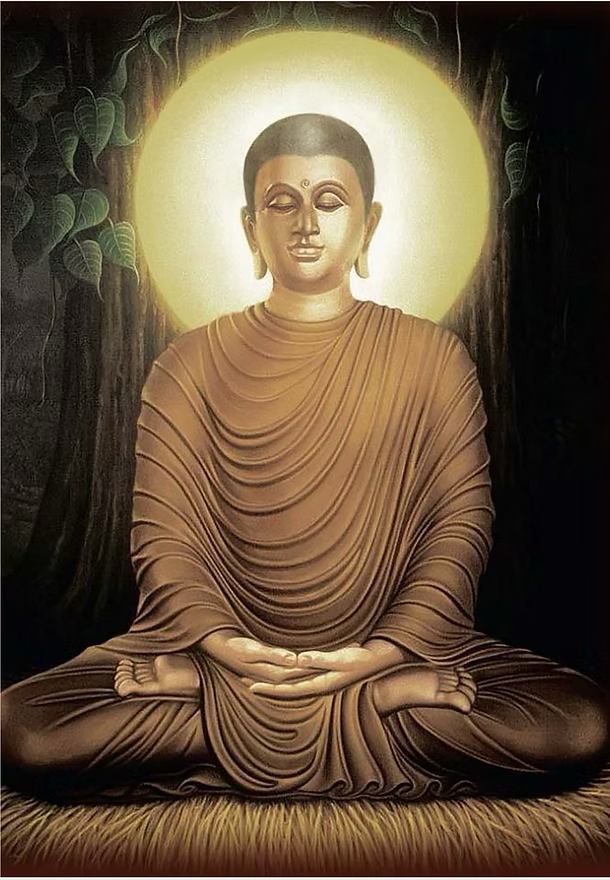
Teacher David,
Gotoma Buddha shared that he did not Teach annihilation but the elimination of discontentedness.
1. Did he Teach about accepting death?
2. Does accepting death result in death?
3. Does accepting death expedite death?
4. What happens when a person fully accepts death?
5. Does accepting death lead to annihilation?
6. Is the "deathless" annihilation?
7. Does annihilation exist?
8. What does it mean to rest in peace?
9. Is it possible to rest in peace while alive?
10. Why is something as wholesome as resting in peace associated with death as opposed to living a peaceful life?
11. Is the phrase "death is life" appropriate? If so, how so.
12. Is it more appropriate to say life on earth is experiencing discontentment or that life itself, in its entirety, is discontentment? Can you explain the differences? (If any)
Thank you, Teacher for sharing and explaining these Teachings.
 Reply from Teacher David Roylance Hello Chris…sure, I will help you. >>>>> Teacher David, Gotoma Buddha shared that he did not Teach annihilation but the elimination of discontentedness. Yes, this is true. >>>>> 1. Did he Teach about accepting death? He taught to eliminate the fear of death or experiencing any discontentedness due to your death or the death of others. >>>>> 2. Does accepting death result in death? Death is the result of being born. Due to birth, there will be death. Whether you accept death or not, there is still going to be death. So accepting death is not results in death. It is birth that results in death. >>>>> 3. Does accepting death expedite death? No it does not. Unwise decisions is what leads to expedited death. >>>>> 4. What happens when a person fully accepts death? The mind will no longer experience any fear of death. >>>>> 5. Does accepting death lead to annihilation? No. >>>>> 6. Is the "deathless" annihilation? No, this is referring to Enlightenment. That once one attains Enlightenment, or the deathless, they will no longer experience death. Instead, an Enlightened being experiences Final Enlightenment. That is not considered to be death. >>>>> 7. Does annihilation exist? This would be to eliminate a being. Examples would be murder or suicide. That would be to annihilate a being. >>>>> 8. What does it mean to rest in peace? People use this phrase to represent what one should do upon death. However, The Path to Enlightenment is to get to peace now, not when you die. >>>>> 9. Is it possible to rest in peace while alive? Yes, and that would be the goal to attain Enlightenment and experience peace and joy for the rest of this life. >>>>> 10. Why is something as wholesome as resting in peace associated with death as opposed to living a peaceful life? That is how some human beings think, but you do not need to think that same way. >>>>> 11. Is the phrase "death is life" appropriate? If so, how so. I would not describe it that way. >>>>> 12. Is it more appropriate to say life on earth is experiencing discontentment or that life itself, in its entirety, is discontentment? Can you explain the differences? (If any) Life on earth is only discontentedness is the mind is unEnlightened. There can be life on earth without discontentedness but, the unEnlightened mind lacks the wisdom of how to accomplish that and is why The Path to Enlightenment is so important to learn and practice. That way, one can cultivate wisdom, train the mind, and experience the elimination of discontentedness where the mind will be peaceful, calm, serene, and content with joy - permanently. >>>>> Thank you, Teacher for sharing and explaining these Teachings. You are welcome sir, pleased to help you and support you in your journey to Enlightenment. |
In-Person Meditation & Buddhist Classes
You are invited to in-person meditation and Buddhist classes in Thailand and the Philippines.
Balai Belen Travellers Lodge
Garnet St. RGA Village, Dacudao
Davao City, Philippines 8000
Everything is offered at no cost to everyone with a sincere interest to learn.
No experience required.